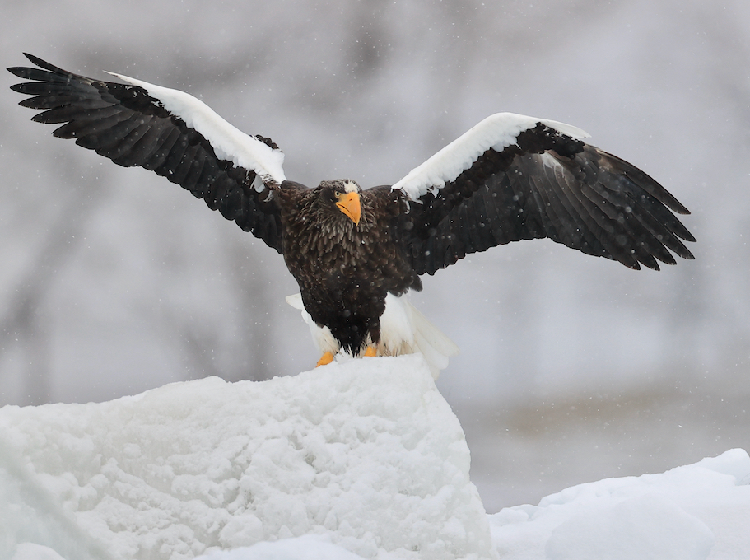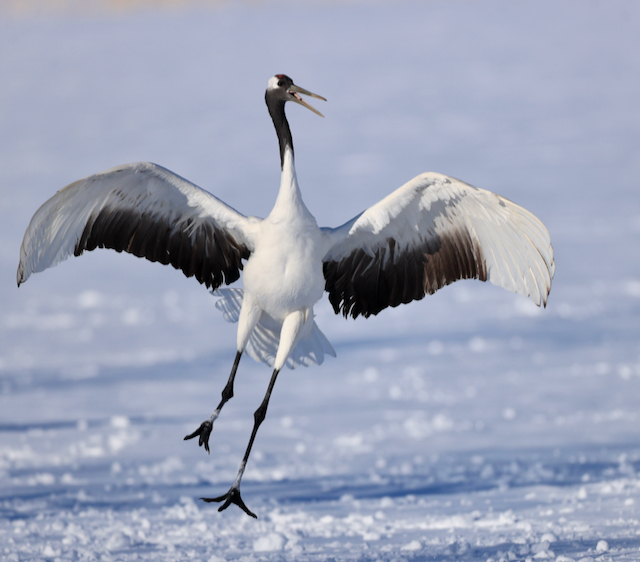
Japan in winter is the most reliable big-bird photography in Asia. Hundreds of Red-crowned Cranes dancing at their riverine roosts and feeding grounds, Steller's and White-tailed Sea Eagles fighting over fish on the pack ice off Rausu, Whooper Swans within arm's reach on ice-fringed, mist-covered lakes, and, after dark, Blakiston's Fish Owl, the largest owl on the planet, at close range. All of it is within a few hours' drive in eastern Hokkaido, and all of it happens in late winter.
Our ten-day Hokkaido tour runs every year at the end of February for one to four photographers, led by Roland, who guided bird and mammal tours in western China for two decades before turning to Japan and Southeast Asia.
Hokkaido, Japan's northernmost island, holds more than 300 species, and its winter birds are habituated in a way that is rare anywhere else. The cranes feed at the same fields every morning; the Rausu eagle boats put you at close range to birds that would be dots in the sky elsewhere; the fish owl hides are heated. That means the work is about light, composition and timing rather than about finding the bird, which is a luxury in wildlife photography. Snow, steam, ice and low winter sun do the rest.
Beyond the famous four, Hokkaido in winter has a long supporting cast: Ural Owl in a tree hole, the white-headed Long-tailed Tits of the Hokkaido race, Japanese Pygmy and White-backed Woodpecker, Varied Tit, Eurasian Bullfinch, Common Redpoll, and the sea ducks of the Nemuro harbours: Harlequin Duck, Black Scoter, Greater Scaup, Red-breasted Merganser. White-naped Crane sometimes winters with the Red-crowned. Sika Deer and Red Fox fill the days when the weather closes in.
Upcountry Japan is an experience in itself. Guesthouses are simple and Japanese, the food is local, and it adds to the trip rather than taking away from it.
Late January to early March. The last week of February gives the best combination: deep snow for the cranes, pack ice in the Nemuro Strait for the eagles, and long nights for the fish owl. Our departure is timed for exactly that window. November and December have cranes but no ice; from April the eagles have gone north. For other seasons and for Honshu, Kyushu or the Ryukyu islands, see our month-by-month guide to bird photography in Japan or ask about a custom itinerary.
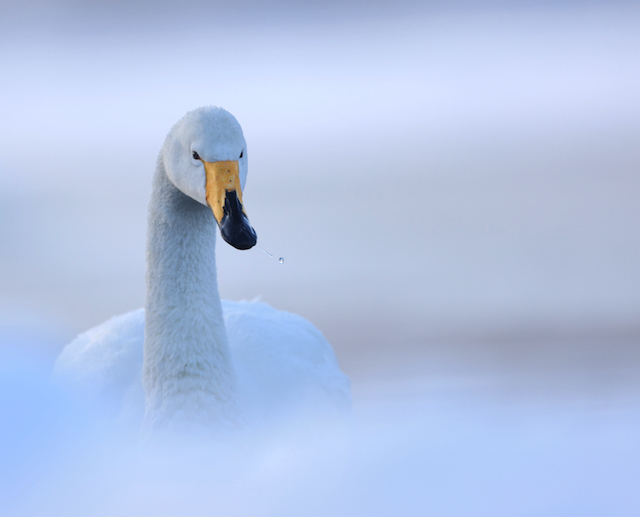
Kushiro, then three nights in the Kushiro marshes for the Red-crowned Cranes at roost and on the feeding grounds, the Whooper Swans, Ural Owl and the Long-tailed Tits; three nights at Rausu on the Shiretoko peninsula for Blakiston's Fish Owl and the eagle boats on the pack ice; three nights at Nemuro for more eagles, the sea ducks and the swans. Return to Kushiro airport. Fifteen photography sessions.
US$7,300 per person (2027, one space left), single supplement US$700, deposit US$2,000. Includes guiding, ground transport, domestic flights, accommodation, meals, entrance and hide fees. Also scheduled 23 February to 4 March 2028 (US$7,700).
Private winter departures are possible from late January to early March; ask us.
Late February for Hokkaido's winter birds. Our scheduled tour runs 23 February to 4 March.
Red-crowned Crane, Steller's Sea Eagle, White-tailed Eagle, Whooper Swan and Blakiston's Fish Owl are all reliable in season. Ural Owl, the white Long-tailed Tit and the sea ducks are likely.
Four at most. Private winter trips are possible from late January to early March; solo travellers on a private trip pay a single-participant surcharge.
The fish owl is photographed from a hide; the cranes, swans and eagles are in the open. Bring 400-600 mm for the cranes and owls, a 70-200 or 100-400 for the eagle boats (they come very close), and spare batteries: minus 15 °C is normal.
Easy. Very early starts in the cold, short walks on snow, boat trips of one to two hours.
Guiding, ground transport, domestic flights, accommodation, meals, entrance fees, eagle boat trips and fish owl hide fees. Not included: international flights, visa, travel insurance, tips for local guides, personal items.
Ask about this tour · Hokkaido winter tour: dates and prices
 : Hokkaido