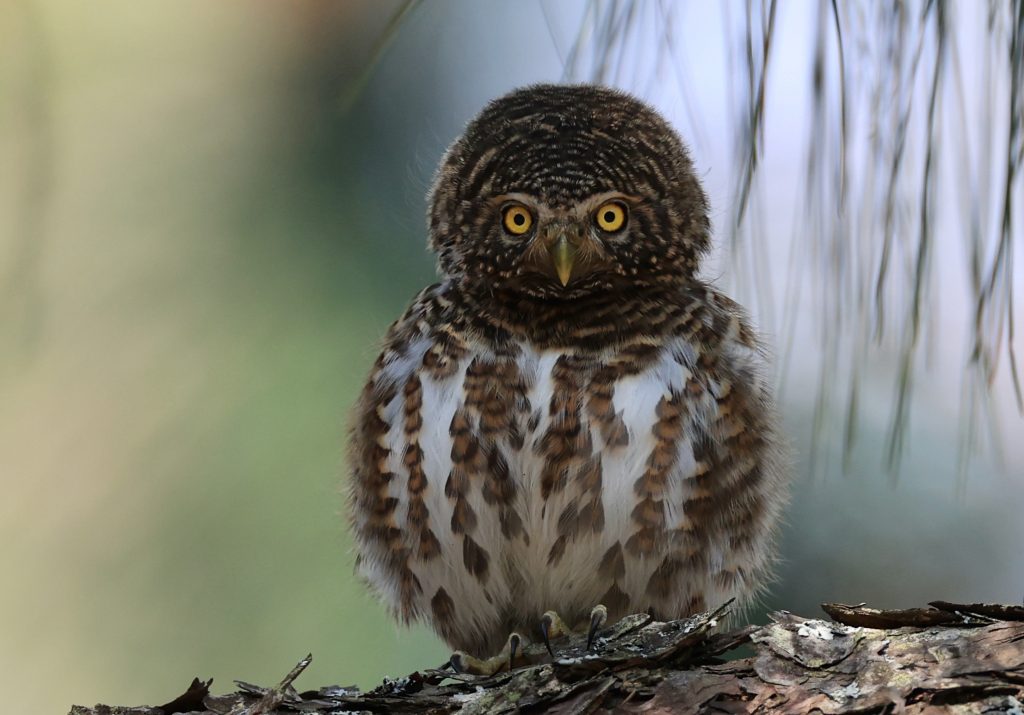
Nepal runs from the Terai plains at a hundred metres to the highest mountains on earth, and more than 900 bird species live in between. Our twelve-day tour takes the lower two-thirds of that range in spring: the eastern hills of Koshi Province for Satyr Tragopan, the Koshi wetlands and grasslands for Swamp Francolin and the big waterbirds, and Chitwan for hornbills, laughingthrushes and the birds of the sal forest. An optional extension goes west for Sarus Crane, Bengal Florican and the grassland chats.
One to four photographers, led by Lobsang, who guides our Himalayan departures in Nepal and India.
Variety in a short distance. Within a week you photograph a tragopan in rhododendron forest, francolins and jacanas on a river floodplain, and hornbills over the forest canopy of a lowland national park, and the drives between them are through some of the finest scenery in Asia. Nepal is also one of the friendliest countries we work in, with a long tradition of hosting naturalists and a good network of lodges.
The eastern hills in April are the reason for the timing: Satyr Tragopan is calling, Hill Partridge and Wedge-tailed Green Pigeon are on the trails, and the sunbirds and magpies are in fresh plumage.
March to early May for the hills, when the tragopan is displaying and the forest is in song; the Terai is dry and the wetland birds are still concentrated. Our departure is in the first half of April. The monsoon from June to September makes the eastern roads and the Terai difficult; November to February is good for the lowlands but the hill birds are quieter.
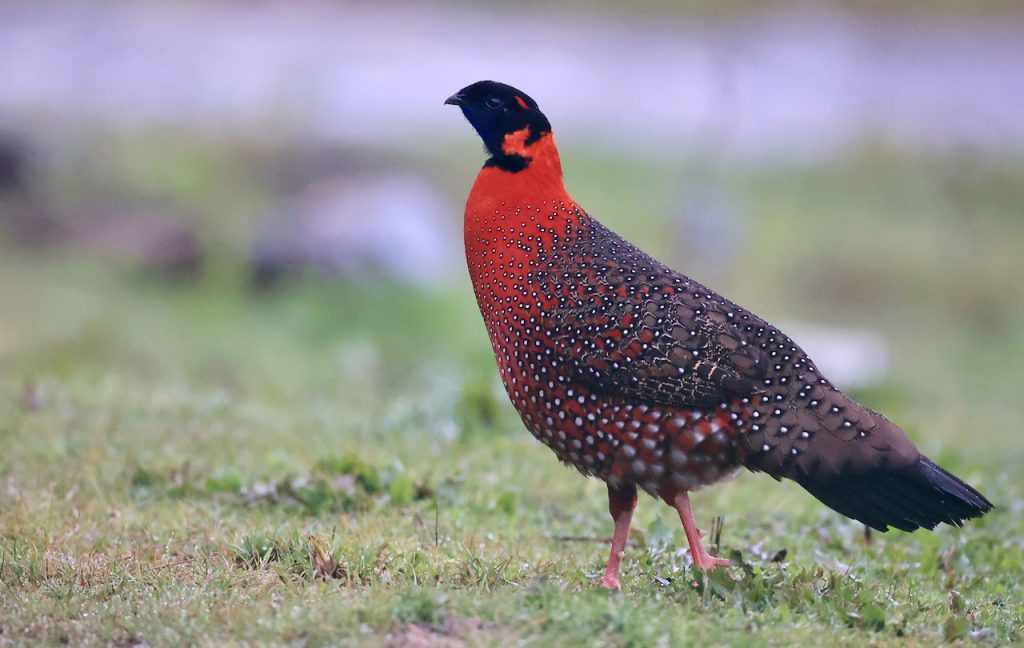
Kathmandu, then a flight east and three nights in the hills of Koshi Province for Satyr Tragopan, Hill Partridge, Wedge-tailed Green Pigeon and Yellow-billed Blue Magpie; three nights on the Koshi floodplain for Swamp Francolin, the waterbirds, Indian Courser and the vultures; three nights at Chitwan for the hornbills, laughingthrushes and forest birds; back to Kathmandu. Seventeen photography sessions.
US$8,000 per person (2027, limited spaces), single supplement US$1,000, deposit US$2,000. Includes guiding, ground transport, domestic flights, accommodation, meals, entrance and hide fees. Also scheduled 4-15 April 2028 (US$8,400) and 2029 (US$8,800).
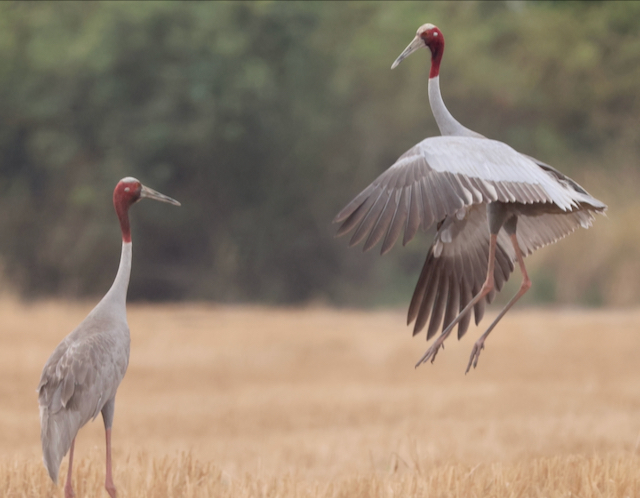
Optional extension, 9 days: Lumbini for Sarus Crane, then a second Lumbini site for the flamebacks, Great Slaty Woodpecker, Indian Grey Hornbill, Tawny Fish Owl and Spot-bellied Eagle Owl, then Sudur-Paschim in the far west for Bengal Florican, White-throated and Jerdon's Bushchat and White-rumped Vulture; flight back from Dhangadhi. Price on request.
Nepal runs on the same dates as Bhutan (4-19 April), so the two cannot be combined in one year on the scheduled departures; private back-to-back arrangements are possible.
March to early May for the hills and the Terai together. Our scheduled tour runs 4-15 April.
Satyr Tragopan in the eastern hills, Swamp Francolin and the waterbirds at Koshi, Great Hornbill and the laughingthrushes at Chitwan. Sarus Crane and Bengal Florican need the western extension.
Four at most. Private departures are possible in spring and in the winter dry season; solo travellers on a private trip pay a single-participant surcharge.
Screens and stakeouts for the tragopan; vehicles and boats at Koshi and Chitwan. 500-600 mm for the hill birds, 400 mm is enough on the floodplain.
Medium. Long mountain drives (the eastern hills are seven hours from the airport), early starts, light walking, no altitude of note.
Guiding, ground transport, domestic flights, accommodation, meals, entrance and hide fees. Not included: international flights, visa, travel insurance, tips for local guides, personal items.