Laos is the country in Indochina almost nobody photographs, which is exactly why we go. It was off the Asian bird photography map until very recently, and our Laos tour was one of the first to work the country properly: eleven days across three provinces, from the grasslands and river sandbars around Vientiane to the limestone karst of Khammouan and the wetlands of Champasak in the south.
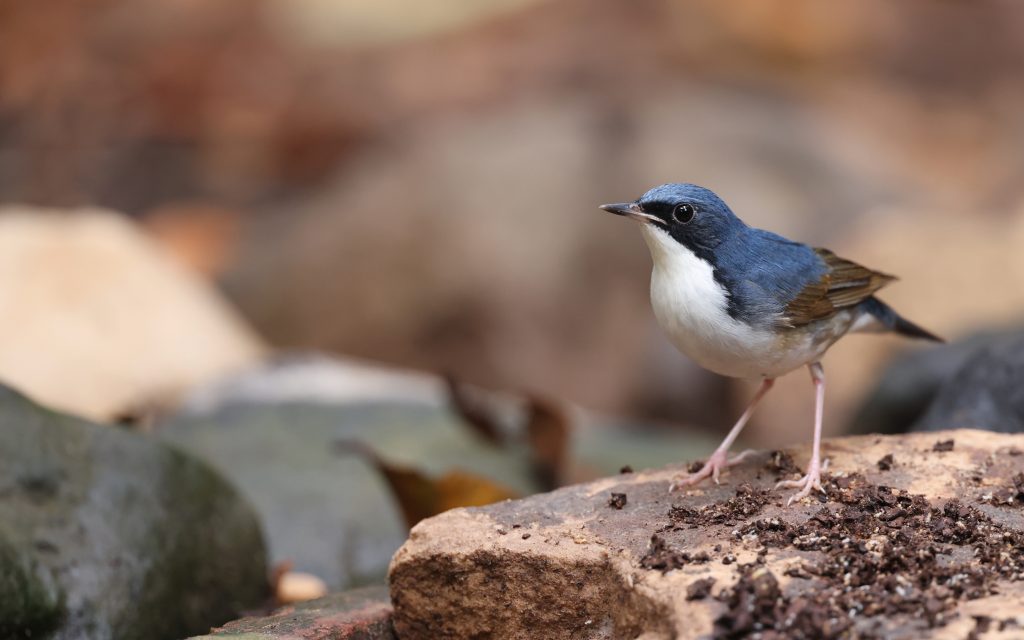
The reason to come is a short list of birds that are difficult or impossible anywhere else: the Bare-faced Bulbul, Laos's only endemic, described in 2009 on the central karst; the near-endemic Sooty Babbler in the same limestone; the Mekong Wagtail on the river in the south; and, in the Vientiane grasslands, the range-restricted Jerdon's Bushchat and the critically endangered Yellow-breasted Bunting. Around them sits a supporting cast of weavers, finches, cuckoos, raptors, pratincoles and hornbills that most photographers have never had at close range.
Two things set Laos apart. The first is the birds themselves: with more than 700 species recorded and almost no photographic pressure, the country still produces images that are rare in any portfolio. The second is the variety of habitats in a short distance. In eleven days you photograph open sandbars and rice country, then vertical limestone towers with dry forest at their feet, then wetlands and riverine forest on the Mekong, without a single long flight in between.
It is not a high-species-count trip, and it is not a hide-only trip like Thailand. It is a place to work carefully, at eye level, on a small number of special birds in landscapes very few photographers have seen.
The dry season runs from October to April. We go in early October, right after the rains: the grasslands are still green, the buntings and the first wintering waders have arrived, and the rivers are dropping to expose the sandbars the pratincoles and lapwings use. February and March are equally good and hotter. The May to September rains make the karst trails and the river sites difficult.
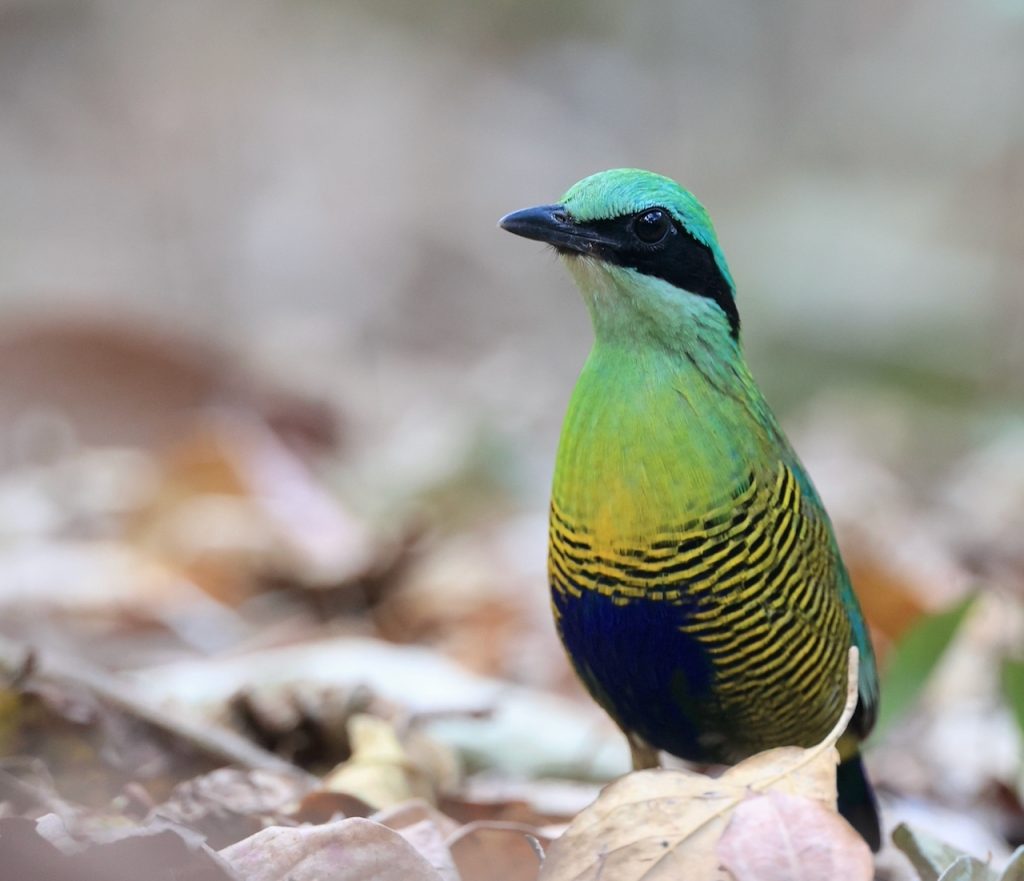
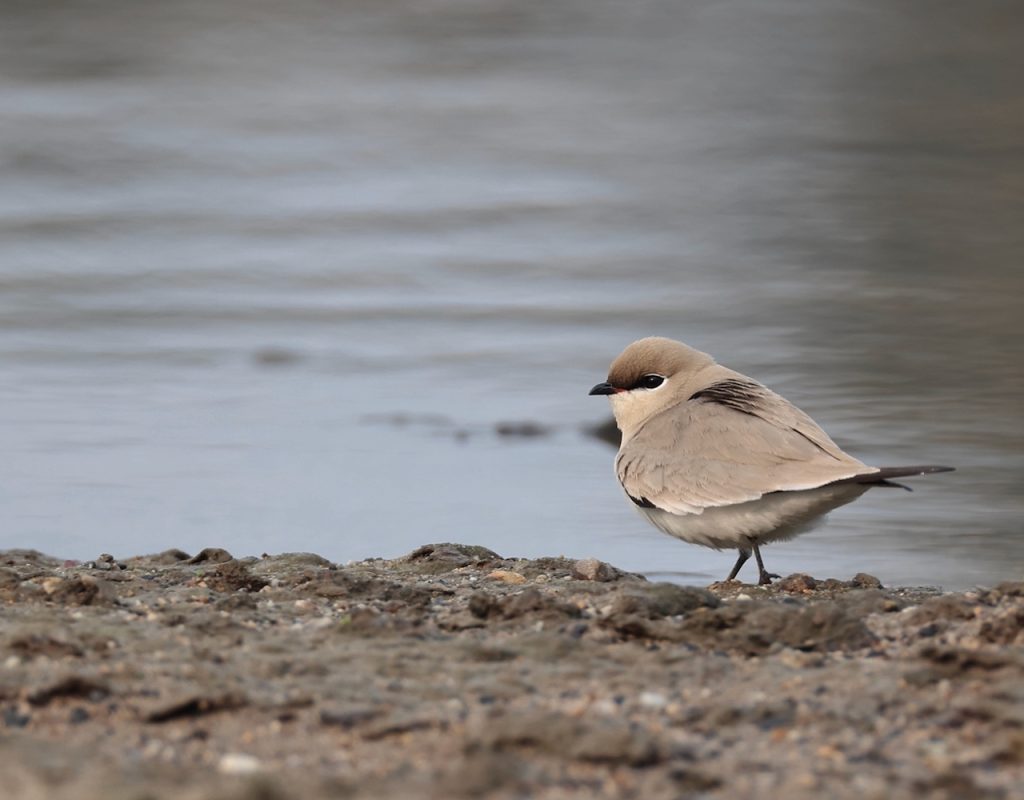
Vientiane, then two districts of Vientiane Province over four nights (Sangthong for Jerdon's Bushchat, Red Avadavat, River Lapwing, Small Pratincole, Black Baza and Violet Cuckoo; Hatsaythong for Yellow-breasted Bunting, the weavers, Small Buttonquail, Pied Harrier and the waders); then two nights in Khammouan Province for Bare-faced Bulbul, Sooty Babbler, Wreathed Hornbill and Red-headed Trogon on the karst; then two nights in Champasak Province for Mekong Wagtail, the bitterns, jacanas, Banded Kingfisher and Blue-bearded Bee-eater; internal flight back to Vientiane. Fifteen photography sessions.
US$6,700 per person (2026, two spaces left), single supplement US$900, deposit US$2,000. Includes guiding, ground transport, domestic flights, accommodation, meals, entrance and hide fees. Also scheduled 4-14 October 2027 (US$7,000) and 2028 (US$7,400).
Laos combines naturally with Vietnam or Cambodia; ask us about private back-to-back itineraries.
October to April. Our scheduled tour runs 4-14 October.
Bare-faced Bulbul, Sooty Babbler and Mekong Wagtail are the reasons to go and are reliable at their sites. Jerdon's Bushchat, Red Avadavat, the weavers, Small Pratincole and River Lapwing are regulars around Vientiane. Yellow-breasted Bunting depends on the season's arrivals.
Four at most. Private trips are possible throughout the dry season; solo travellers on a private trip pay a single-participant surcharge.
Some sites have hides; much of the grassland and river work is done from vehicles and low positions. 500-600 mm is the right tool for the karst birds and the sandbars; 400 mm is enough at the closer sites.
Easy. Short walks on uneven limestone to reach the karst birds, early starts, two long drives between provinces.
Yes. It is one of the calmest countries in the region; the practical challenge is distance, which we handle with our own vehicles, drivers and the internal flight at the end.
Guiding, ground transport, domestic flights, accommodation, meals, entrance and hide fees. Not included: international flights, visa, travel insurance, tips for local guides, personal items.