Papua New Guinea is the one country every bird photographer wants and most never get to. More than 800 species, the birds-of-paradise found nowhere else, bowerbirds, crowned pigeons, a hundred parrots and kingfishers, and almost none of it photographable from a car window. It takes lodges in the right valleys, landowners who know the display trees, and a group small enough to sit quietly under one of them at dawn.
That is how we run it: four photographers at most, twelve days across the highlands and the lowland forest near Port Moresby, and two optional extensions for those who want the Western Province birds-of-paradise or the Manus endemics as well.
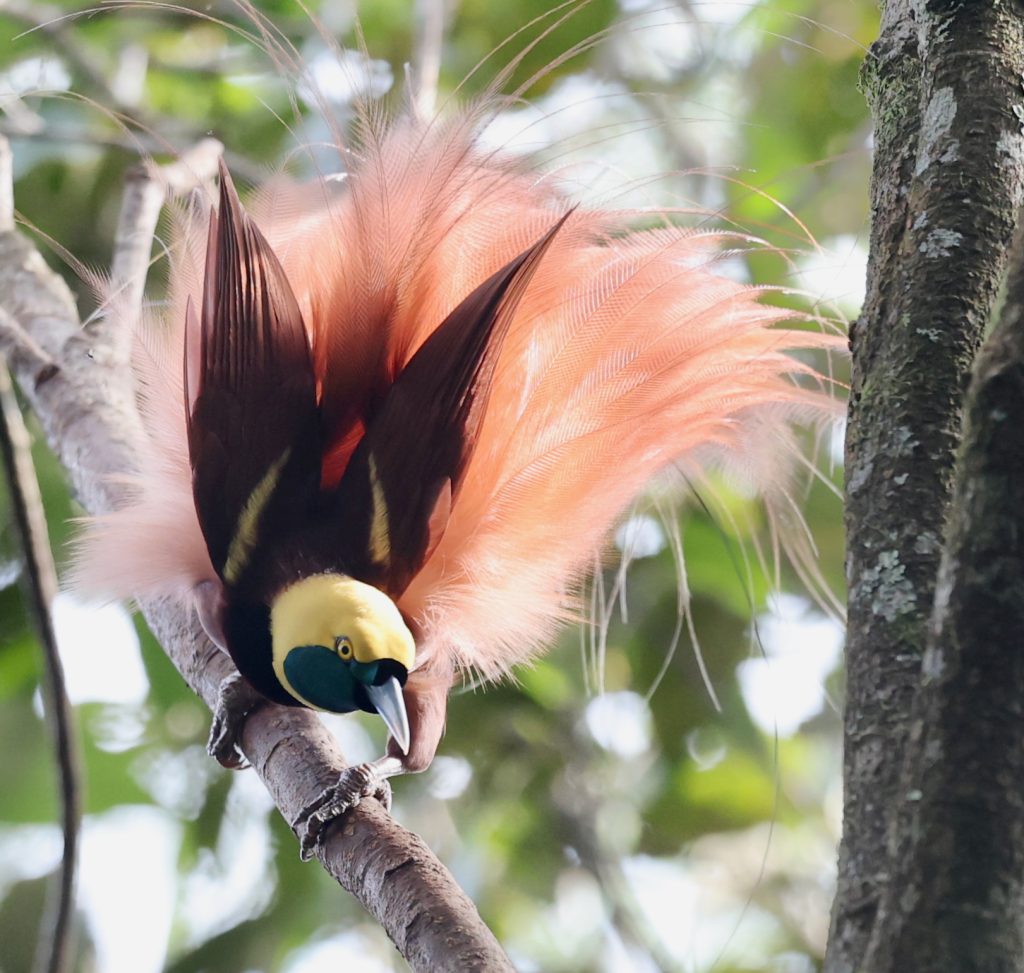
The birds-of-paradise are the reason, and the mainland route is built to put twelve of them in front of the lens. But photographing them is nothing like a hide session in Thailand. A Raggiana lek is a tree at first light; a King of Saxony display perch is a bare branch above a forest gap; Blue Bird-of-paradise hangs upside down from a vine you have to find the week before. Light is low, distances are long, and you get one or two chances a morning. It rewards preparation, which is exactly why we keep the group tiny and the guides local.
Around the birds-of-paradise there is a second layer that is much easier: highland lodge feeders that bring Ribbon-tailed Astrapia, Brown Sicklebill and the melidectes to within a few metres, forest edges with Papuan Lorikeet and Brehm's Tiger Parrot, and, at Varirata, a run of kingfishers that includes the Brown-headed Paradise Kingfisher and the tiny Papuan Dwarf Kingfisher. Nightbirds are a feature too: Barred Owlet-Nightjar, Papuan Frogmouth, Papuan Boobook and Barking Owl are all on the list. Low visitor numbers mean the birds are not pressured and the images are still rare, even among professionals.
The dry season, June to September, is when we travel: roads are passable, the highlands are clear in the morning, and the birds-of-paradise are displaying. Early August is the sweet spot. October to April brings the rains that make the highland and Western Province sites unreliable.
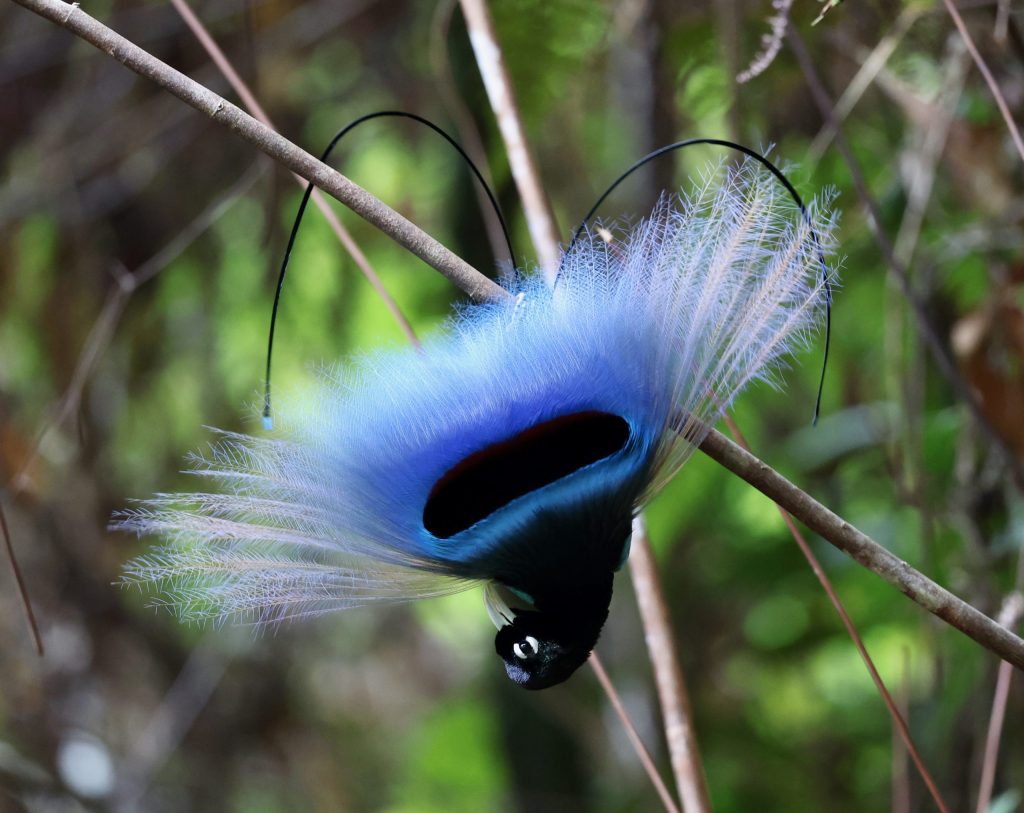
Port Moresby, then five nights in the Western Highlands for Blue, King of Saxony, Raggiana and Lesser Birds-of-paradise, both astrapias, Brown Sicklebill, Short-tailed Paradigalla and Lawes's Parotia; then four nights at Varirata National Park for Raggiana at the lek, Growling Riflebird, the kingfishers, the owlet-nightjars and owls. Sixteen photography sessions across the trip.
US$9,200 per person (2027), single supplement US$950, deposit US$3,000. Includes guiding, ground transport, domestic flights, accommodation, meals, entrance and hide fees. Also scheduled 4-15 August 2028 (US$9,700) and 2029 (US$10,100).
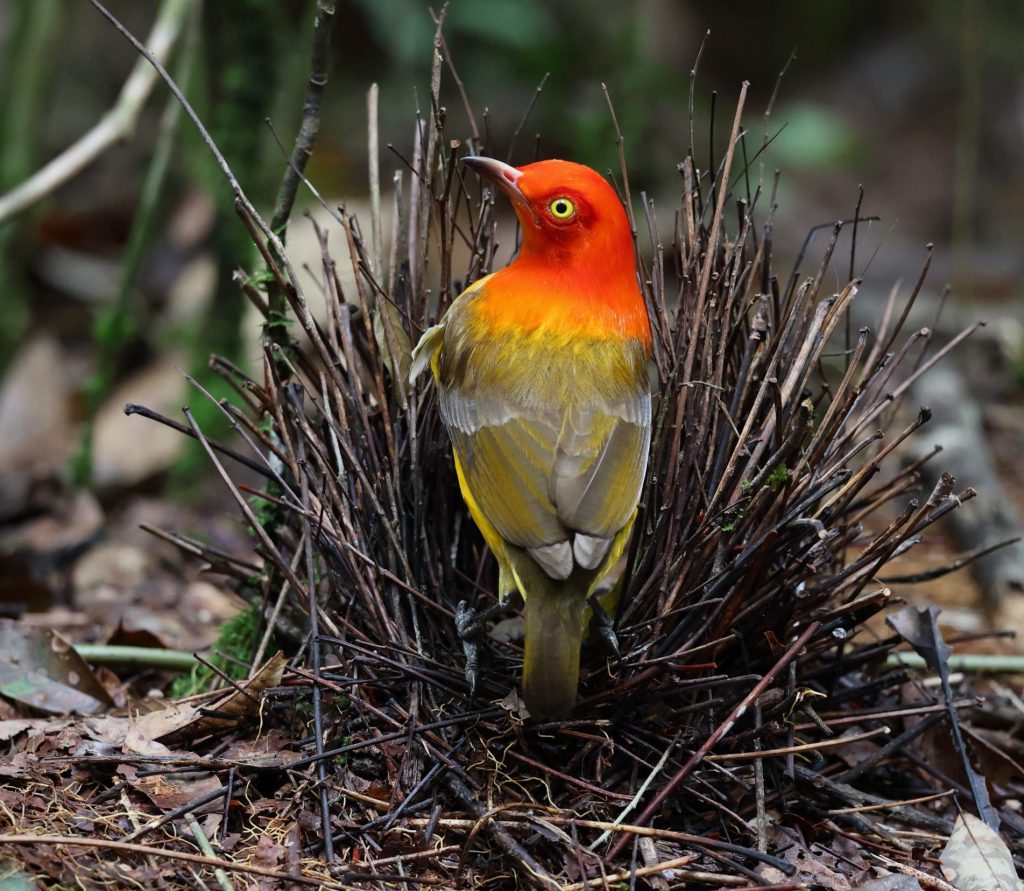
Pre-tour extension: Western Province, 10 days – US$8,900. The Fly River lowlands for Twelve-wired, King, Magnificent and Greater Birds-of-paradise, Magnificent Riflebird, Black Sicklebill, Flame Bowerbird, Southern Crowned Pigeon, Shovel-billed Kingfisher and Starry Owlet-Nightjar.
Post-tour extension: Bismarck Archipelago, 7 days – US$6,200. Manus Island for Superb Pitta, Manus Dwarf Kingfisher, Manus Boobook, Manus Friarbird and Cuckooshrike, Nicobar Pigeon, Melanesian Scrubfowl and the Bismarck endemics.
Both extensions are detailed on the departure page. Private departures in the dry season are possible on request.
June to September, in the dry season. Our scheduled departure is 4-15 August.
On the mainland route, Raggiana, King of Saxony, Ribbon-tailed and Princess Stephanie's Astrapia, Brown Sicklebill, Short-tailed Paradigalla and Lawes's Parotia are the regulars; Blue, Lesser, Magnificent, Black Sicklebill and Growling Riflebird are likely with normal luck. Nobody honest promises all twelve in one trip. Add the Western Province extension for Twelve-wired, King and Greater.
Four at most. Private departures are possible in the dry season; solo travellers on a private trip pay a single-participant surcharge.
Lodge feeders and some display sites have screens; many lek sites do not. Bring 500-600 mm for the leks and a 100-400 or similar for the feeders. High-ISO performance matters more here than anywhere else we go.
Medium. Light walking most days, early starts, one site with a real hike and climb, and long transfers on rough roads. No camping.
With a well-run operator, yes. We fly between regions, move by pre-arranged vehicles, stay at established lodges and work with the same local partners every year.
Guiding, ground transport, domestic flights, accommodation, meals, entrance and hide fees. Not included: international flights, visa, travel insurance, tips for local guides, personal items.
 : Mainland