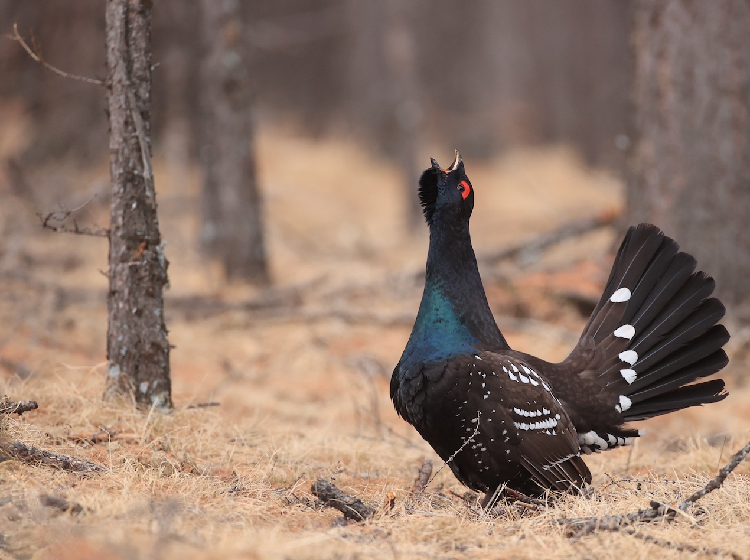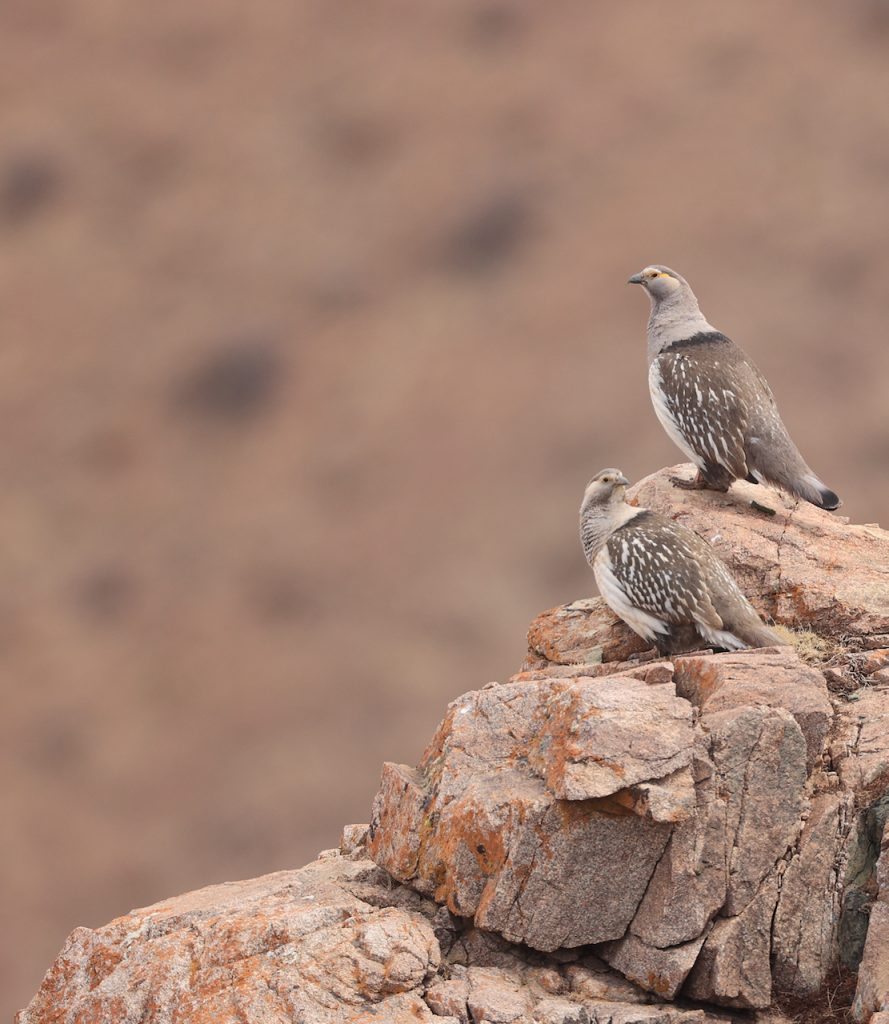
Mongolia is a country of three million people spread across a land the size of Western Europe: the southern edge of the Siberian taiga in the north, endless steppe in the centre, the Gobi Desert in the south. It is a true wilderness, and our twelve-day spring tour is built around three birds that are among the hardest in East Asia to photograph: Black-billed Capercaillie at its lek in the pine forests near Ulaanbaatar, Altai Snowcock on a mountain ridge we know how to reach, and MacQueen's Bustard displaying on its breeding grounds in the Gobi.
One to four photographers, ten nights under canvas, led by Nick.
Timing. For a few short weeks in late April and early May, the capercaillies gather at their leks and can be watched at close range as rival males compete; the bustards arrive on the Gobi breeding grounds and display; and the snowcocks are on accessible ridges before the snow melts and pushes them higher. Outside that window, all three are near-impossible. Our departure is timed for it.
The supporting cast is the birds of the steppe and desert in spring plumage: Demoiselle Crane, Oriental Plover, Pallas's Sandgrouse, Mongolian Ground Jay, Saxaul Sparrow, Père David's Snowfinch, Wallcreeper, the accentors, Güldenstädt's and Eversmann's Redstart, Red-throated, Dusky and Naumann's Thrush, Saker Falcon and Cinereous Vulture, all photographed in wide-open habitat with nothing but sky and steppe behind them.
The last week of April and the first two weeks of May: the leks are active, the bustards are displaying, the snowcocks are low, and spring migration is passing through. That is the only window for this trip. Summer is good for breeding waterbirds but the three target species have dispersed; winter is for a different kind of photography altogether.
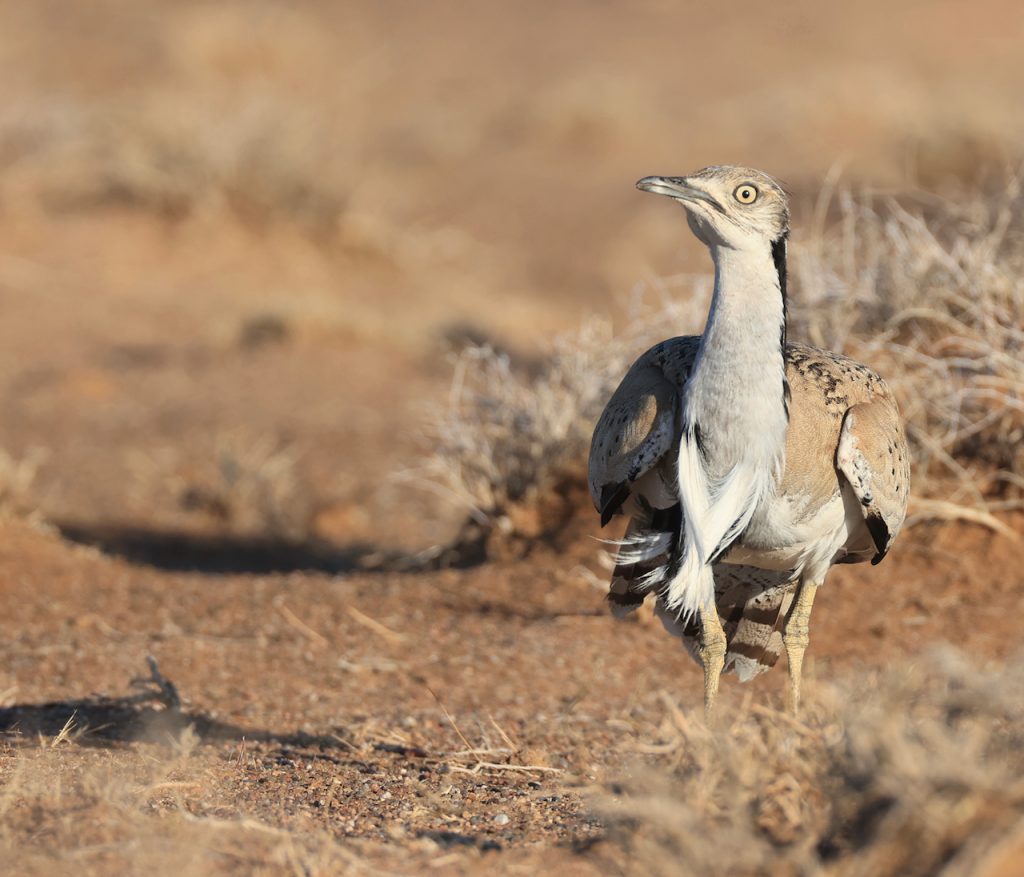
Ulaanbaatar (rosefinch, wryneck, Mandarin Duck in the city parks), then three nights camped in Tov Province for Black-billed Capercaillie at the lek, with the thrushes; three nights camped in Ovorkhangai Province for Altai Snowcock, Wallcreeper, the accentors, Oriental Plover and Cinereous Vulture; four nights camped in Omnogovi Province, the Gobi, for MacQueen's Bustard, Saker Falcon, Pallas's Sandgrouse, Demoiselle Crane and the desert birds. Nineteen photography sessions. Two extra days can be added for photographers who want more time on their targets.
US$8,900 per person (2027), single supplement US$1,000, deposit US$3,000. Includes guiding, ground transport, domestic flights, camping and accommodation, meals, entrance and hide fees. Also scheduled 30 April to 11 May 2028 (US$9,300) and 2029 (US$9,800).
Late April to mid May for the three target species. Our scheduled tour runs 30 April to 11 May.
Black-billed Capercaillie at the lek and MacQueen's Bustard on the display grounds are reliable in the window; Altai Snowcock depends on weather and is why we give it three days. Demoiselle Crane, Oriental Plover, Pallas's Sandgrouse and the ground jay are regulars.
Four at most. Private departures are possible in the same spring window; solo travellers on a private trip pay a single-participant surcharge.
Hides at the lek and the bustard grounds; vehicle and stalking elsewhere. 600 mm with a teleconverter for the bustard and snowcock; 400-600 mm for the rest.
Medium. It is a camping expedition with long drives; the birds themselves are photographed without hard walking, except for a climb to the snowcock ridge. Nights can be cold in early May.
Guiding, ground transport, domestic flights, camping and hotel accommodation, meals, entrance and hide fees. Not included: international flights, visa, travel insurance, tips for the camp crew and local guide, personal items.