

Red-crowned Cranes in the Snow: The Iconic Japan Winter Shot Explained
Of all the images that draw photographers to Japan in w […]

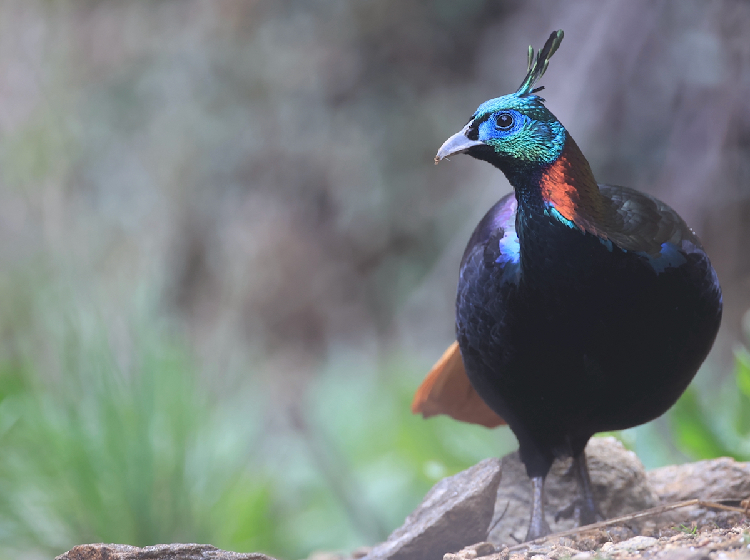
No group of birds rewards the patient photographer quite like the pheasants. Asia is their stronghold — a continent that holds the most dazzling members of the family on earth, from iridescent monals glowing on Himalayan slopes to tragopans inflating electric-blue throat lappets in the forests of China. They are shy, they are hard-won, and a clean frame of a displaying male is one of the most coveted images in all of bird photography.
Here are twelve of the most spectacular pheasants in Asia, what makes each one special, and where you have a realistic chance of photographing them.
If one bird embodies the glory of the pheasant family, it's this one. The male Himalayan Monal is a walking rainbow — iridescent green, copper, blue and violet plumage above stark black underparts, topped with a wiry crest. The national bird of Nepal, it ranges along the Himalayas from northern India through Bhutan and into Tibet, living on high oak-conifer slopes and alpine meadows between roughly 2,100 and 4,500 metres.
Where to photograph: The Kedarnath Wildlife Sanctuary area in Uttarakhand, India (the Chopta/Tungnath region) is the classic spot, where monals are relatively numerous and can be approached with care. Bhutan and the Tibetan Plateau also offer superb opportunities. Snow makes for unforgettable images, as the birds come down to roost in trees.
For many photographers this is the pheasant. The male's strawberry-red plumage is covered in delicate white spots ringed with black, and in display he inflates an electric-blue throat lappet and raises a pair of fleshy blue horns — one of the strangest and most beautiful courtship transformations in the bird world. It's largely restricted to the mountains of western China.

Where to photograph: The hide network in Sichuan, particularly around the Tanshi area south of Chengdu, offers a very high chance of close encounters, sometimes including display.
Larger and arguably even more sought-after than its Himalayan cousin, the Chinese Monal is an endemic of the high alpine zone of western China, found on rocky scrub slopes below the snowline. Photographing it means working in genuinely awesome high-mountain scenery, often with the help of local trackers.
Where to photograph: The Luding/Balang Shan region of Sichuan, in the high country above the treeline. This is a true expedition bird and one of the great prizes of Chinese pheasant photography.
A near-endemic of southwestern China, the male is an extravagant confection of black-and-white scalloped neck feathers, a metallic green back, red rump and an absurdly long barred tail. In display he fans the black-and-white facial cape and parades before the female — a spectacle that's hard to forget.
Where to photograph: The Sichuan hides (Tanshi and similar) are reliable, with displaying males often present in spring.
Perhaps the most familiar pheasant in the world thanks to its popularity in captivity, the wild Golden Pheasant is no less stunning: a golden-yellow crest, scarlet underparts, and an orange "cape" the male spreads across his face in display. Wild birds in their native central China are far shyer than their captive cousins, making a clean wild image genuinely prized.

Where to photograph: Forested hill country in central China, increasingly accessible through dedicated hides.
One of the rarest and most elusive of all pheasants, the Western Tragopan — known locally as jujurana, the "king of birds" — is endemic to the western Himalayas of India and Pakistan. Photographing it is a serious undertaking; few people have ever managed good images of this shy, vulnerable forest specialist.
Where to photograph: The Great Himalayan National Park in Himachal Pradesh, India, holds one of the last major populations. This is a bird for the most dedicated and patient photographer.
The Himalayan counterpart to Temminck's, the Satyr Tragopan is a deep crimson bird spangled with white-centred ocelli, with a blue facial skin that brightens in display. It inhabits dense, wet Himalayan forest, which makes it a challenging but tremendously rewarding subject.

Where to photograph: Bhutan and the eastern Himalayas of India offer the best chances, typically in spring when males are calling and displaying.
Subtle rather than gaudy, but beautiful in its own right: soft grey streaked plumage washed with apple-green and splashes of crimson on the face, throat and tail. It lives at high altitude near the snowline, often in small parties, and is unusually approachable for a pheasant.

Where to photograph: High passes in Sichuan, Bhutan and the eastern Himalayas, frequently alongside monals and snowcocks.
The holder of one of the longest tails of any bird — males can have tail feathers well over a metre long. This striking golden-and-black endemic of central China is now scarce in the wild, which makes a genuine wild encounter all the more special.

Where to photograph: Forested hills of central China; some sites and hides now offer access to this increasingly rare species.
A handsome bird of southern China and Southeast Asia, the male sporting a glossy black crest and underparts above a back of fine white feathers etched with black lines, with bright red facial skin. Striking in a more monochrome key than its rainbow relatives.

Where to photograph: Forest and forest-edge sites across southern China and into Southeast Asia, including at some hide set-ups.
A more understated but beautifully patterned pheasant, the male marked with silvery streaking, a glossy black head with prominent ear tufts, and chestnut tones. It's a bird of steep Himalayan and Chinese mountain forest, more often heard giving its dawn call than seen.

Where to photograph: Mid-to-high elevation forest in the Himalayas and western China, usually requiring early starts to catch calling birds.
An elegant endemic of the mountain forests of Taiwan, the male a dark, almost regal bird of deep blue-black plumage finely barred with white on the wings and tail. Tame birds at well-known mountain sites make Taiwan one of the easiest places in Asia to photograph a wild endemic pheasant.

Where to photograph: The high-mountain roads of central Taiwan, where Mikado and Swinhoe's Pheasants both occur and can be remarkably confiding.

A few realities unite this whole group. Pheasants are shy, ground-dwelling forest birds, most active in the first and last light of day, often in dim conditions that demand high ISO and a camera with strong low-light performance. Many of the best opportunities come from hides and feeding stations — particularly in China — where birds appear predictably at close range. Above all, success depends on being in the right place at the right season with people who know exactly where individual birds display, feed and call.
Spring is generally prime, when males are in full breeding finery and actively displaying, though some species (like the monals) are wonderful in winter snow.
These are bucket-list birds, and most of them are realistically photographable only with the right local access and timing. Our China bird photography tours are built around the best hides for tragopans, monals, Golden and Lady Amherst's Pheasants, while our trips to India, Bhutan, Nepal and Taiwan target the spectacular Himalayan and island species.
If you'd like to build a trip around a particular pheasant — the Chinese Monal, the Western Tragopan, or the Mikado — our custom photography tours can be shaped around it. Get in touch and let's plan it.

Nick Ludovic Green is a bird photographer and founder of Bird-Photo-Tours ASIA, leading small-group expeditions across Asia and Oceania.
Of all the images that draw photographers to Japan in w […]

Few things shape the success of a bird photography trip […]

No group of birds rewards the patient photographer quit […]