

Red-crowned Cranes in the Snow: The Iconic Japan Winter Shot Explained
Of all the images that draw photographers to Japan in w […]

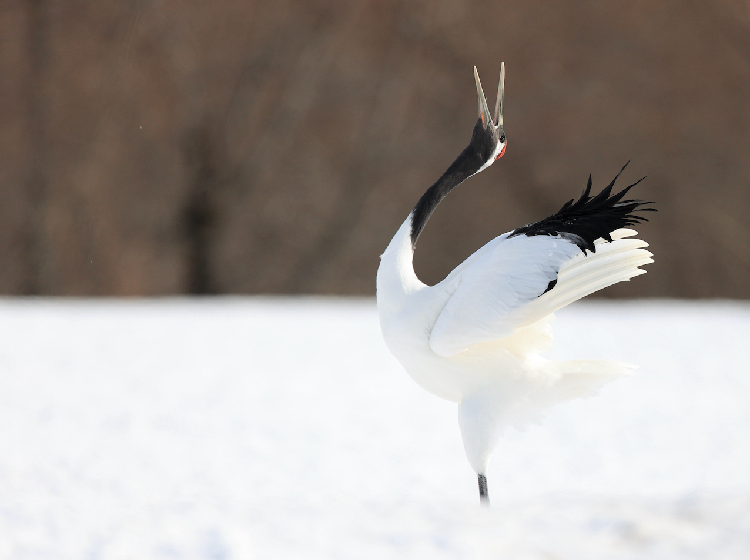
Of all the images that draw photographers to Japan in winter, none is more iconic than a pair of Red-crowned Cranes dancing in falling snow — wings spread, heads thrown back, calling in unison. It's a picture steeped in Japanese culture, where the crane is a symbol of longevity and good fortune, and it's one of the most beautiful sights in all of wildlife photography. The good news for photographers is that it's also remarkably achievable, if you go to the right place at the right time.
This guide explains where and when to photograph the Red-crowned Cranes of Hokkaido, and how to capture the shots you're picturing.
Part of what makes photographing these cranes so moving is knowing how close they came to vanishing. The species was thought to have been wiped out in Japan in the early twentieth century, until a small flock was rediscovered in the marshes near Kushiro in eastern Hokkaido. Through decades of protection and winter feeding by local communities, the population has recovered to around a thousand birds — a stable, resident flock that no longer migrates and that now winters in the snowfields of eastern Hokkaido, where it has become a magnet for photographers from around the world.
Today the cranes are not just a photographic subject but a pillar of the local economy, their protection woven into the life of villages like Tsurui.
The prime window is the deep winter, roughly December through February, with February the standout month. This is when the cranes gather in their greatest numbers at the feeding sites, and — crucially for photographers — when their elaborate courtship displays peak. As winter wanes and the days lengthen, pairs increasingly break into the dancing, bowing, leaping and unison-calling that produce the most memorable images.
February also gives you the best chance of the classic conditions: cranes against fresh snow, or wreathed in the frozen mist of a sub-zero dawn. Snowfall, while harder to shoot in, transforms a good crane image into a magical one.
A handful of sites in eastern Hokkaido, mostly around the village of Tsurui and the city of Kushiro, form the heart of crane country.
The feeding sanctuaries — such as the Tsurui-Ito Red-crowned Crane Sanctuary, managed by the Wild Bird Society of Japan — are where the cranes gather in numbers through the day. Feeding stations bring them into the open at close range, ideal for portraits, dancing behaviour and interaction. These are the most reliable places to spend time with the birds.
Otowa Bridge at dawn is the signature location. The cranes roost overnight standing in a shallow, geothermally warmed river, and on the coldest mornings the water steams around them in golden first light — one of the most celebrated and atmospheric wildlife photography settings anywhere in Japan. It's a cold, early, competitive spot, but the results are unforgettable.
The Akan International Crane Center is another classic. Here, fish put out for the cranes regularly draws in White-tailed Sea Eagles that swoop to steal it — adding dramatic raptor action to the crane spectacle, and a chance at very different images.

Cranes in snow present a couple of specific challenges worth preparing for.
Expose for the snow. As with any snowy scene, your meter will try to render the white as grey, underexposing the image and dulling the cranes' white plumage. Dial in positive exposure compensation to keep the snow bright and clean, while protecting the highlights and the birds' striking red crowns and black-and-white markings.
Decide between freezing and flowing. For the explosive moments of dancing and leaping, a fast shutter speed freezes the action crisply. But on snowy days, a deliberately slower shutter can render falling snow as soft streaks and convey a sense of movement and atmosphere — a more artistic interpretation of the same scene. It's worth shooting both.
Work the behaviour. The whole point of coming here is the display. Watch for the build-up — birds facing each other, postures stiffening, calls rising — and be ready before the dance erupts. Unison calling, bowing and the great wing-spread leaps are the frames you came for.
Think about composition. With a clean white background, cranes lend themselves to minimalist, almost graphic compositions — negative space, a single pair, falling snow. Don't only fill the frame; some of the strongest crane images use the emptiness of the snowfield.
Dress for brutal cold. Dawn at Otowa Bridge in February is punishing. Warm layers, serious gloves and warm batteries are essential, and a tripod helps for the low-light dawn and for slow-shutter work.
The Red-crowned Cranes of Hokkaido are one of the most reliable and rewarding subjects in winter wildlife photography — but the best images come from being at Otowa Bridge at the right dawn, at the sanctuaries when the birds are dancing, with guides who know the sites and the light. Our Japan bird photography tours are timed for the February peak and built around the cranes, eagles and owls of the Hokkaido winter.
To plan around the wider season, see our guide to bird photography in Japan month by month and our companion piece on photographing Steller's Sea Eagles in Hokkaido. Prefer a tailored trip? Our custom photography tours can be shaped around exactly what you want to capture. Get in touch and let's plan your Japanese winter.

Nick Ludovic Green is a bird photographer and founder of Bird-Photo-Tours ASIA, leading small-group expeditions across Asia and Oceania.
Of all the images that draw photographers to Japan in w […]

Few things shape the success of a bird photography trip […]

No group of birds rewards the patient photographer quit […]