

Red-crowned Cranes in the Snow: The Iconic Japan Winter Shot Explained
Of all the images that draw photographers to Japan in w […]

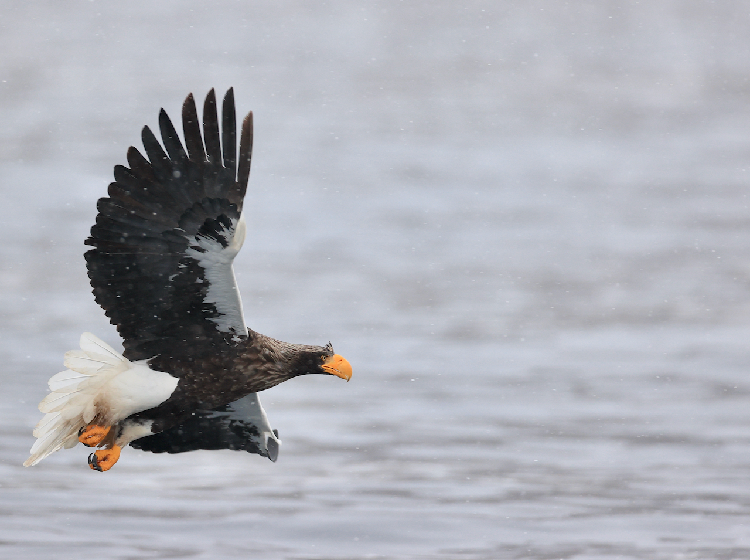
There are few more dramatic birds on earth than the Steller's Sea Eagle. With a wingspan approaching 2.5 metres, a massive orange-yellow bill, and bold white shoulders against jet-black plumage, it is one of the largest and most powerful eagles in the world — and each winter, eastern Hokkaido offers the single best place on the planet to photograph it. Eagles gathering on drifting pack ice against a backdrop of snow-covered peaks is one of the great wildlife photography spectacles, and it draws photographers from around the world.
This guide covers when to go, where to position yourself, and how to come home with the images that make this trip worth the cold.
Steller's Sea Eagles breed in far-eastern Russia and migrate south for the winter, with several thousand birds spending the coldest months in and around Hokkaido. The first arrive as temperatures fall in November, and through the deep winter they concentrate along the northeast coast — drawn by fish and by the advancing sea ice that pushes down the Sea of Okhotsk.
That sea ice is the key to the whole spectacle. As it reaches the Shiretoko Peninsula, the eagles gather on the floes to rest and to feed, joined by the more numerous White-tailed Sea Eagles. The combination of huge raptors, white ice, dark water and mountain backdrops creates the conditions that make Hokkaido unique. Nowhere else can you photograph these birds in such numbers, in such a setting.

Timing is critical and the window is narrow. February is the heart of the season, when the pack ice typically reaches the coast and the eagles are present in their greatest concentrations.
Go too early — early or mid-winter before the ice arrives — and the great gatherings on the floes may not yet have formed. Go too late and you miss them: as the ice retreats in March, most of the eagles, particularly the adults, move north back toward Russia, leaving behind a higher proportion of young and subadult birds. Lingering individuals can sometimes be found in eastern Hokkaido into late March, but for the full spectacle, late January into February is the reliable target.
It's worth remembering that the ice is driven by wind and weather and varies year to year — another reason to build a few days of margin into any trip rather than gambling on a single morning.
A few locations in eastern Hokkaido form the classic circuit.
Rausu is the centre of it all. This small fishing port on the Shiretoko Peninsula is where the eagle-watching boat cruises depart, heading out into the Nemuro Channel between Shiretoko and the island of Kunashiri. The cruises are the signature experience: from the deck you photograph eagles fishing, fighting and perching on the floating ice, often at close range. Mid-air disputes over fish are common and produce some of the trip's most dramatic frames. These pre-dawn and early-morning departures put you on the ice in the best light of the day.
The Nemuro Peninsula, particularly Lake Furen, is another major wintering area for both Steller's and White-tailed Sea Eagles, with a classic frozen-lake-and-reedbed setting and Whooper Swans often present alongside.
These eagle sites combine naturally with the region's other winter icons — the Red-crowned Cranes around Tsurui and Kushiro and the swans at Lake Kussharo — into a single photography itinerary.

Photographing eagles on the ice presents a specific set of challenges, and preparing for them pays off.
Expose for the white. Snow and ice dominate the frame, and your camera's meter will tend to underexpose, turning white ice grey and muddying the eagles' dark plumage. Be ready to add positive exposure compensation to keep the ice bright and clean, while watching that you don't blow the highlights on the white shoulders.
Set up for action. Much of the best material is birds in flight, landing on ice, or squabbling over fish. Use continuous autofocus, a fast shutter speed to freeze powerful wingbeats, and a high frame rate to catch the decisive moment. A body with strong subject-detection autofocus is a real asset against the busy, high-contrast background.
Bring flexible reach. From the boat, birds range from distant to startlingly close. A versatile telephoto zoom (such as a 100–500mm or 200–600mm) is often more useful than a long fixed prime, letting you reframe instantly as eagles approach. There's room for a wider lens too, to capture the eagles small against the ice and peaks for a sense of scale.
Dress for the cold and protect your gear. Mornings on the open water in a Hokkaido February are bitterly cold. Warm, layered clothing and good gloves are essential — a cold, miserable photographer misses shots. Bring spare batteries kept warm in an inner pocket, as the cold drains them fast, and be mindful of condensation when moving between the freezing outdoors and warm interiors.
Part of what makes this trip so rewarding is the supporting cast. The same winter itinerary that delivers the eagles also offers the dancing Red-crowned Cranes, trumpeting Whooper Swans in the geothermal mist of Lake Kussharo, the gigantic Blakiston's Fish Owl by night, and charming smaller birds like the snowball-like "Shima Enaga." Few winter destinations pack so many iconic subjects into such a compact area.

The Steller's Sea Eagle spectacle is one of the most reliable and dramatic in all of wildlife photography — but it hinges on being in Rausu at the right point in the season, with the boat operators and local knowledge to make the most of the ice and the light. Our Japan bird photography tours are timed for the February peak and built around the eagles, cranes and owls of the Hokkaido winter.
For a fuller picture of the country's birding year, see our guide to bird photography in Japan month by month, or get in touch to discuss a custom photography tour. Contact us and let's plan your winter on the ice.

Nick Ludovic Green is a bird photographer and founder of Bird-Photo-Tours ASIA, leading small-group expeditions across Asia and Oceania.
Of all the images that draw photographers to Japan in w […]

Few things shape the success of a bird photography trip […]

No group of birds rewards the patient photographer quit […]